Why checking used cymbals for cracks matters
A well-kept bronze cymbal can outlast several owners, so the secondhand market offers good value. It is also easy to misrepresent a cymbal. A hairline crack can hide under dirt, patina or stick marks, and a photo taken at the wrong angle may show nothing wrong. Cracks generally change the sound and can keep spreading. A few millimeters of metal can separate a bargain from a paperweight.
The principle behind this guide is simple. Catch problems before money changes hands. If you miss one, document it honestly and use legitimate claim routes. One community thread shows what is at stake. In an anecdotal Reddit post, a buyer said a used cymbal arrived cracked and asked whether it could be fixed. Some replies suggested telling a misleading warranty story to get a replacement [R1]. That advice is the trap this article helps you avoid.
Inspect the edge, bell and mounting hole in good light
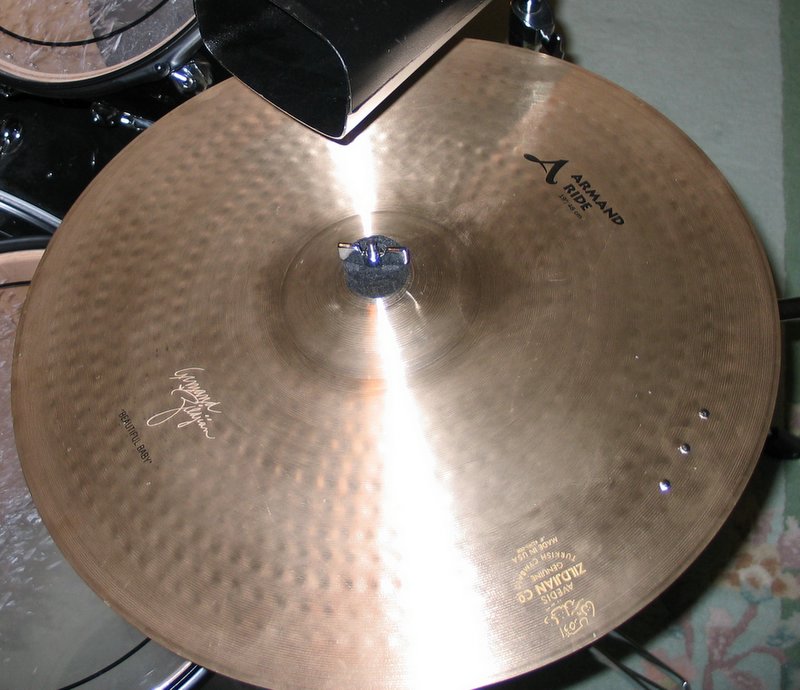
If you can see the cymbal in person, bring a small flashlight and take your time. Rotate the cymbal slowly through its full circle and check both faces at the edge. A crack often looks like a fine dark line running inward from the rim, but it can also sit inside a lathing groove, where it is easy to miss. Tilt the cymbal so light rakes across the surface. A crack tends to catch light differently from the grooves around it and may break the groove pattern.
Next, check the bell, especially where it meets the bow, and then the center hole. Keyholing means the mounting hole has worn into an oval or teardrop shape. It usually comes from playing without a proper sleeve or on a badly angled stand. Mild keyholing is often cosmetic. Deep wear thins the metal around the hole, and that weakened area deserves a closer look for any line running outward. Finally, hold the cymbal loosely and tap it lightly. A buzz, a rattle or an oddly short decay is a reason to look harder.
- Check the full edge on both faces, not just the side facing up
- Use raking light to tell cracks from lathing grooves
- Check the bell-to-bow transition and the area around the hole
- Note any oval or teardrop wear at the mounting hole
- Listen for buzzing or unusually short sustain
Request both-side photos before payment
Most used cymbal sales happen remotely, so the seller's photos are your inspection. Ask for clear, well-lit images of the top and bottom. Ask for close-ups of the edge taken in overlapping sections, plus the bell and a straight-on shot of the mounting hole. A short video of the cymbal being played also helps, because some cracks are easier to hear than to see.
Make your questions specific so you can compare the answers against what arrives. Ask directly whether the cymbal has cracks, keyholing, repairs, drilled or rivet holes, or edge cuts. That works better than asking whether it is in good shape. Keep the written reply. If the seller says there are no cracks and the cymbal arrives cracked, that message becomes evidence.
- Top and bottom in daylight or bright, even light
- Edge photographed in overlapping sections
- Straight-on close-up of the center hole
- A short clip of the cymbal being played
- A written yes or no on cracks, repairs and modifications
Separate advertised damage from unexpected damage
Not every damaged cymbal is a bad buy. Some players buy cracked or repaired cymbals cheaply on purpose, for effects stacks, practice kits or projects. The question is whether the seller disclosed the damage. A cymbal listed as cracked and priced that way is a fair deal, even if you later regret it. A cymbal listed as crack-free that arrives cracked is a different situation.
Reverb's seller help describes a process for buyers who report items that arrive damaged or not as described. The process includes a protection window, evidence collection, and a return or refund workflow. It also indicates that a seller's own return policy does not remove that platform protection [S2]. Read the current terms on whatever platform you use, including the reporting deadline, because details vary between marketplaces and can change. A private cash sale may have no platform process at all, so inspecting in person matters more there.
Understand uncertain repair life and changed sound
Can a cracked cymbal be fixed? Drummers commonly discuss two approaches. One is drilling a small hole at the end of a crack to try to stop it from spreading. The other is cutting out the cracked section. Both are attempts to extend usable life, not restorations. The sound usually changes, sometimes a lot, and no one can reliably predict how long a repaired cymbal will hold. Treat any confident promise that a repair will last as opinion, not fact.
When buying, value a cracked cymbal at what you would pay for it in its damaged state, and assume a repaired one may change further. If a seller describes a repair as professional, ask who did it and when, and request close-up photos. If you are thinking about repairing a cymbal you already own, a reputable drum shop can explain its approach and the tradeoffs. Wait until any dispute is fully resolved first.
Preserve evidence before drilling or modifying
If a cymbal arrives with undisclosed damage, stop before changing anything. Do not drill it, cut it, clean it aggressively, or play it hard to see what happens. Any modification can weaken a damage or not-as-described claim, because the seller or platform can no longer see the item as it arrived.
Photograph the packaging before and during unboxing. Then photograph both sides of the cymbal, with close-ups of the damage next to a ruler or coin for scale. Save the listing, including its description and photos, along with all messages and the delivery date. Reverb's guidance treats evidence collection as part of its issue workflow [S2], so having this ready helps the process move.
- Screenshot the listing before it can be edited or removed
- Photograph the box, padding and any shipping damage
- Take close-ups of the crack with a scale reference
- Keep the cymbal unmodified until the claim is closed
Use truthful retailer and manufacturer claim routes
The suggestion in that anecdotal thread to tell a misleading warranty story needs a direct answer: do not do it [R1]. Inventing a purchase date, posing as the original owner, or calling shipping or playing damage a manufacturing defect is dishonest. It is also likely to fail. Zildjian's US warranty page, for example, excludes secondhand cymbals and requires the original receipt and a review of the cymbal [S1]. A story that contradicts those terms is a false claim.
Secondhand warranty eligibility is brand-specific. For other brands, read the manufacturer's current US terms or ask the manufacturer plainly whether a second owner has any coverage. For undisclosed damage on a used purchase, the right route is usually the seller and the platform you bought through, not the manufacturer.
Hypothetical worked example
This is a hypothetical case. A drummer buys a used 20-inch ride from an online listing that says no cracks and no keyholing. Before paying, the buyer asks for photos of both sides and a video, and the seller confirms in writing that there are no cracks. When the ride arrives, a flashlight reveals a thin line about an inch in from the edge. It sits inside a lathing groove that the photos did not show.
The buyer leaves the cymbal untouched. They photograph the box and the crack next to a ruler, then screenshot the listing and the seller's message. Next, they open a not-as-described case within the platform's stated window and send the seller a calm message with the evidence. They do not file a defect claim with the manufacturer, because the cymbal is secondhand. If the case stalls, they escalate rather than drill the crack.
Red flags and when to escalate
Watch for these signs in a listing: a single photo, distant or flattering angles, an edge covered by a hand or stand, or a seller who refuses close-ups. Be cautious when the price is well below comparable listings, when the description avoids the word crack, or when the seller pushes for off-platform payment, which can strip away protections. If a seller says a warranty transfers to you, check the manufacturer's own written terms yourself.
Escalate in stages. Start with a polite message to the seller, then use the marketplace's formal issue process. If you paid by card or through a payment service, that provider may have its own dispute process, so check its terms. For larger amounts or apparent fraud, your state attorney general or local consumer protection office can explain the options where you live. Rules vary by state, and this guide is not legal advice.
- Few, distant or angled photos
- Refusal to show the edge or center hole
- Pressure to pay outside the platform
- Unverified claims that a warranty transfers
Your next steps
- Before paying, ask for well-lit photos of both sides, the full edge, the bell and the mounting hole
- Get a written answer on cracks, keyholing, repairs and drilled holes
- Inspect in raking light and check for oval wear at the center hole
- Confirm the platform's deadline for reporting damaged or not-as-described items before buying
- On arrival, photograph the packaging and any damage before handling the cymbal further
- Do not drill, cut or modify a cymbal while a claim is open
- Save the listing, messages and delivery date
- Read the manufacturer's current US warranty terms on secondhand coverage, and never invent purchase details
Questions that come up next
Can I claim a manufacturer warranty on a used cymbal?
It depends on the brand, so read that manufacturer's current US terms. Zildjian's US warranty page, for example, excludes secondhand cymbals and requires the original receipt and a review of the cymbal [S1]. If a seller says a warranty transfers, confirm it directly with the manufacturer rather than trusting the listing. Never invent purchase details.
Is keyholing a dealbreaker?
Not always. Mild oval wear at the mounting hole is common and may be only cosmetic. Deep keyholing thins the metal around the hole, so check that area closely for cracks. Ask for a straight-on close-up of the hole, look for any line running outward, and base your offer on the wear you can see.
Should I stop-drill a crack on a cymbal I just received?
Not while a damage or not-as-described claim is still possible. Modifying the cymbal can hurt your case, because the item no longer matches its condition on arrival. Document everything first and work through the seller and platform [S2]. How long a drilled repair lasts is uncertain, and the sound usually changes, so make repair a separate, later decision.
Sources & further reading
Community discussions identify lived problems; they do not establish technical or legal requirements. Primary references support the specific claims cited above.
- R1 / COMMUNITY DISCUSSIONGot delivered a cracked cymbal... is it fixable ↗
- S1 / PRIMARY REFERENCEZildjian warranty ↗
- S2 / PRIMARY REFERENCEReverb: Buyer reports issues on an order ↗