Why speaker watts mislead a generator order
The wattage on a speaker or amplifier spec sheet is a tempting starting point for sizing a generator, but it answers the wrong question. On a powered speaker, the headline figure generally describes the built-in amplifier's electrical output, often a peak value. On a passive cabinet, the rating describes how much amplifier power the speaker can handle. Neither figure is the AC input the equipment draws from the mains, and that input draw, and how it changes through the show, is what a generator supplier needs.
One Reddit thread in r/livesound illustrates the problem. In that single anecdote, a user trying to power a PA from a generator blurred together amplifier output, input consumption, fuel runtime and splitting the show across generators [R1]. Those are four separate questions. The thread is one person's post, not evidence of how widespread the confusion is, and its equipment list should not be used to infer any generator size [R1].
Gather electrical input data, not marketing figures
PA generator power consumption depends on the real input requirements of amplifiers, powered speakers, processors, lighting, video, backline and any vendor loads sharing the supply. Look in manufacturer documentation for mains input figures, such as rated input current or AC consumption at a stated operating condition. If several values are listed, ask the manufacturer or rental house which applies to typical concert use and which describes the worst case.
Do not convert output watts into input watts with an online rule of thumb. Amplifier design, efficiency, program material and level all vary, and a supplier working from your guessed conversion inherits your error. Send the manufacturer's own input data plus a note on how the system will run, and let the qualified power contractor interpret it.
- List every device by make and model, not just category.
- Reference the manufacturer's AC input specification for each.
- Flag devices with no clear input data so the supplier can follow up.
- Include non-audio loads on the same feed, such as lighting, video, vendors and site offices.
Building the supplier brief
Beyond the equipment list, the supplier needs an operating schedule: load-in, soundcheck, doors, each set, changeovers, curfew and load-out, with concurrent systems marked. A headline set with full lighting, video walls and the whole PA is a very different load from a daytime acoustic slot. Describe how you intend to power up, since some equipment draws more at switch-on than in steady operation, and ask whether the supplier wants a staged sequence.
Identify sensitive equipment such as digital consoles, network switches, wireless receivers and show control computers so the supplier can consider supply quality and separation from noisy loads. If the show might be split across more than one generator, raise it as a question rather than a decision. Load division and grounding arrangements are design matters for the power contractor, not something to improvise from forum advice.
Who chooses the generator and distribution
With a complete brief, the qualified supplier should be responsible for generator selection, distribution design and cable runs, and should provide a documented operating plan with stated assumptions you can check against your schedule. Avoid applying a universal safety multiplier yourself; the right margin depends on the load profile, generator type, environment and the supplier's practices.
Connection, distribution, grounding and bonding work belongs to trained, qualified electrical personnel. OSHA's portable generator guidance lists electrical hazards among the main risks of generator use, alongside carbon monoxide, fire and noise [S1]. Buyers should oversee and question, not perform or redesign that work. Confirm in writing which connection points your crew may use and who signs off the system before power is handed over.
Operator, monitoring, fuel and shutdown
Discuss with the supplier whether an event generator operator should attend, particularly for multi-day festival generator rental or complex distribution. If so, agree attendance hours and a backup escalation contact. Ask how load, fuel and alarms will be monitored and how often readings are logged.
Fuel is a separate calculation from generator size, which is exactly what the Reddit poster blurred [R1]. Ask for a consumption estimate based on your schedule, the refuelling method and timing, and who delivers fuel. Confirm who may shut a generator down, under what conditions and how that decision reaches stage management, so a shutdown is never a surprise mid-set.
- Named operator and backup contact with phone numbers.
- Monitoring method and logging frequency.
- Fuel estimate tied to your actual schedule, with refuelling plan.
- Written authority for planned and emergency shutdown.
Putting the generator on the site plan
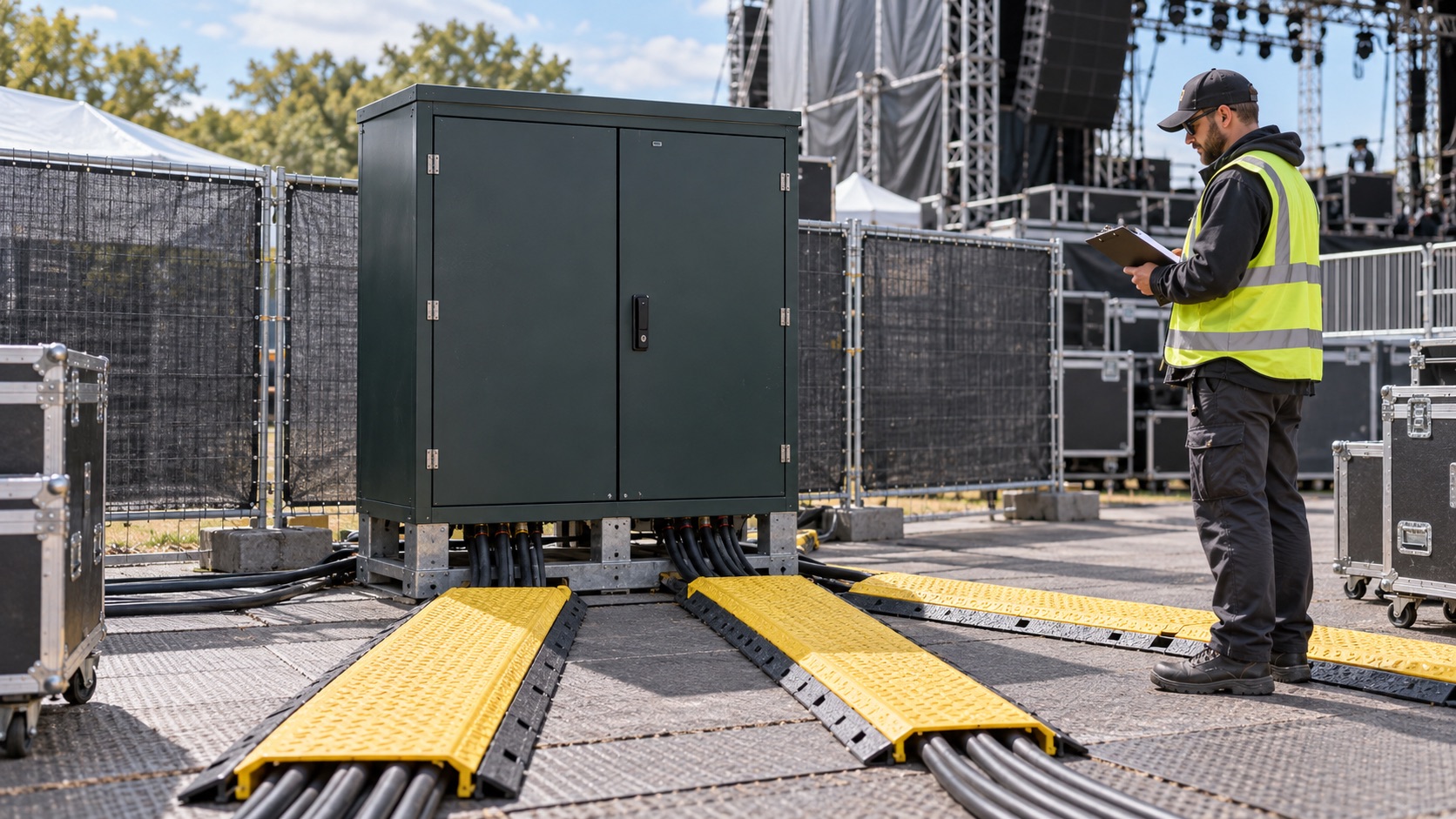
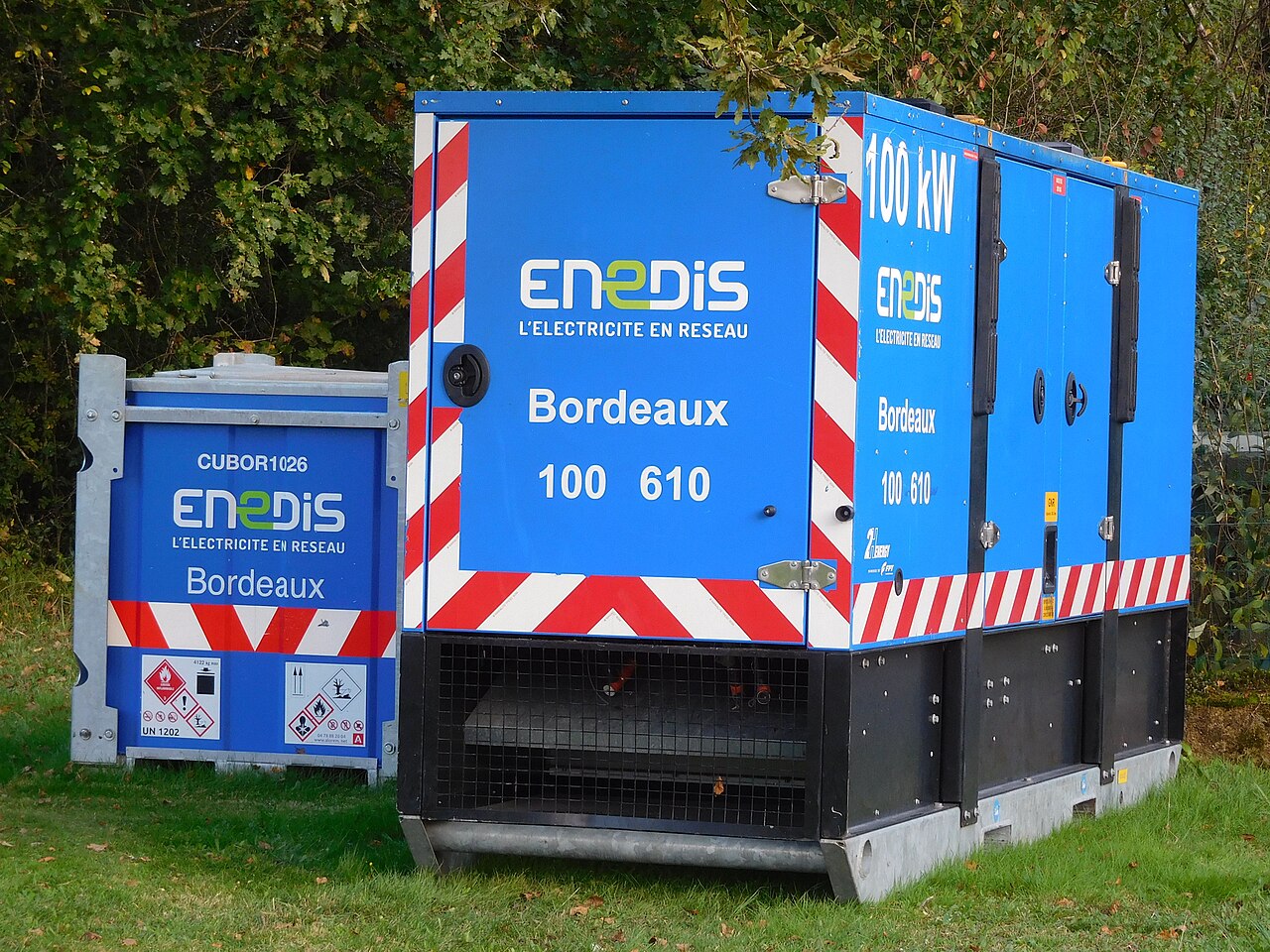
Generators bring exhaust, noise, heat, fuel and heavy vehicles onto a site, and OSHA names carbon monoxide, fire and noise as generator hazards [S1]. Placement should not be left to the delivery driver. Draw the generator, fuel storage, cable routes, public barriers and delivery and refuelling access on the site plan before anything arrives, keeping exhaust away from audiences, tents, crew areas and air intakes, and cables out of egress routes or protected as the supplier and venue require.
Detailed rules come from the authority having jurisdiction, not a federal safety leaflet. As one city example, Austin Fire's special events guidance covers site-plan approval, inspections, generator siting, egress, special effects and fire-watch arrangements [S2]. That material is Austin-specific; do not assume its distances or thresholds apply elsewhere. Contact the fire marshal or permitting office where your event takes place.
Planning what keeps working during a failure
Fuel problems, mechanical faults or a tripped breaker can stop even a well-specified system. Decide in advance, with the venue and safety stakeholders, what must keep working: production and security communications, essential lighting, announcement capability and anything else your safety plan relies on. Ask the supplier how those functions will be supported, whether by separate supply, battery backup or redundancy, and what switchover looks like.
Write down the failure procedure: who notices, who calls whom, what stage management announces and who decides whether the show resumes. Local officials may have their own expectations; in Austin, egress and fire-watch arrangements are part of the special events picture [S2]. Check with your own authority rather than copying another city's approach.
Red flags in rental quotes and how to verify
One misleading offer to watch for is a low price for a generator chassis alone, with fuel, distribution, cable, delivery, collection, operator attendance and setup left unspecified. Ask every bidder to quote against the same brief and itemise each element or state clearly that it is excluded.
Be cautious if a supplier sizes the job from speaker wattage without asking about input data, schedules or concurrent loads, or declines to put assumptions and responsibilities in writing. Verify insurance, request references from comparable events and confirm who holds electrical sign-off. Treat a dramatically cheaper quote as a prompt to find what is missing.
- Chassis-only pricing with fuel, distro and cable unspecified.
- No operator, monitoring or escalation contact listed.
- Delivery and collection times or charges absent.
- Sizing offered before the supplier has seen your equipment list.
Hypothetical worked example and when to escalate
Hypothetical example only: a promoter plans a one-day outdoor show with a PA, modest lighting, an LED screen and two food vendors. The production manager collects AC input specifications from the PA, lighting, video and vendor teams. One processor has no clear input figure, so it is flagged for the supplier rather than estimated. The brief lists the schedule, notes that the headline set runs everything at once, describes a staged power-up and marks the console and wireless racks as sensitive. Of three quotes, one prices only the generator; the other two itemise distro, cable, fuel, an operator and collection, and the manager compares those.
Escalate when anything stays unclear: to the manufacturer for missing input data, to the supplier's qualified electrical lead for distribution or grounding questions, and to the local fire authority for siting, fuel storage or inspections. In the example, the manager sends the updated site plan for local review before booking delivery.
Your next steps
- Collect manufacturer AC input data for every device sharing the supply.
- Write an operating schedule marking concurrent loads and power-up sequence.
- Identify sensitive control equipment that needs stable, protected power.
- Ask the qualified supplier to specify generator and distribution and document assumptions.
- Confirm operator hours, escalation contact, monitoring, fuel plan and shutdown authority in writing.
- Place generator, fuel, exhaust zone, barriers and vehicle access on the site plan before delivery.
- Agree with venue and safety stakeholders what stays powered during a failure.
- Require itemised quotes covering fuel, distro, cable, attendance, delivery and collection.
- Contact the local fire marshal or permitting office about event generator requirements.
Questions that come up next
Can I add up speaker wattage to choose a generator?
No. Powered-speaker figures generally describe amplifier output, and passive ratings describe power handling; neither is the AC input a generator must supply. Gather manufacturer input data for every device, add schedules and concurrent loads, and give that to a qualified power supplier, who should specify the generator and document assumptions.
Do I need an operator for a festival generator rental?
It depends on event size, duration, distribution complexity and local requirements. For multi-day or complex shows, an operator who monitors load, fuel and alarms and has clear shutdown authority can be valuable. Ask the supplier what they recommend, put attendance hours and an escalation contact in writing, and check venue or authority expectations.
Do Austin's special event generator rules apply everywhere?
No. Austin Fire's special events guidance is local to Austin and covers items such as site-plan approval, inspections, generator siting, egress and fire watch. Other cities and states set their own requirements. Contact the fire marshal or permitting office where your event takes place and confirm distances, inspections and approvals directly.
Sources & further reading
Community discussions identify lived problems; they do not establish technical or legal requirements. Primary references support the specific claims cited above.
- R1 / COMMUNITY DISCUSSIONPowering a PA with a generator; how to calculate consumption? ↗
- S1 / PRIMARY REFERENCEOSHA: Using Portable Generators Safely ↗
- S2 / PRIMARY REFERENCEAustin Fire: Special Events ↗