Why the handoff between sound and electrical gets blurry
Many live sound engineers know a lot about power from the equipment side. They read input requirements and connector types in manuals, notice when gear behaves badly on a shared circuit, and know which racks need dedicated outlets. That knowledge is useful, but it does not give anyone authority to do electrical work. In one r/livesound thread titled Electrical Skills, the visible excerpt shows audio people unsure where sound work stops and licensed electrical work starts [R1]. This is one community discussion, and we have seen only a search excerpt of it. It does not show how common the confusion is, but it captures a question many organizers face.
Scope ambiguity does not replace the technical hazards. It adds to them. Shock, fire and equipment damage are real risks, and they become more likely when nobody has written down who owns each piece of the power chain. A band tech may assume the venue checked the supply. The venue may assume the rental company did. The rental company may assume the promoter hired an electrician. A good temporary event power contractor helps by making those assumptions explicit and putting them in writing.
Map the boundary: venue supply, temporary distribution, equipment connections
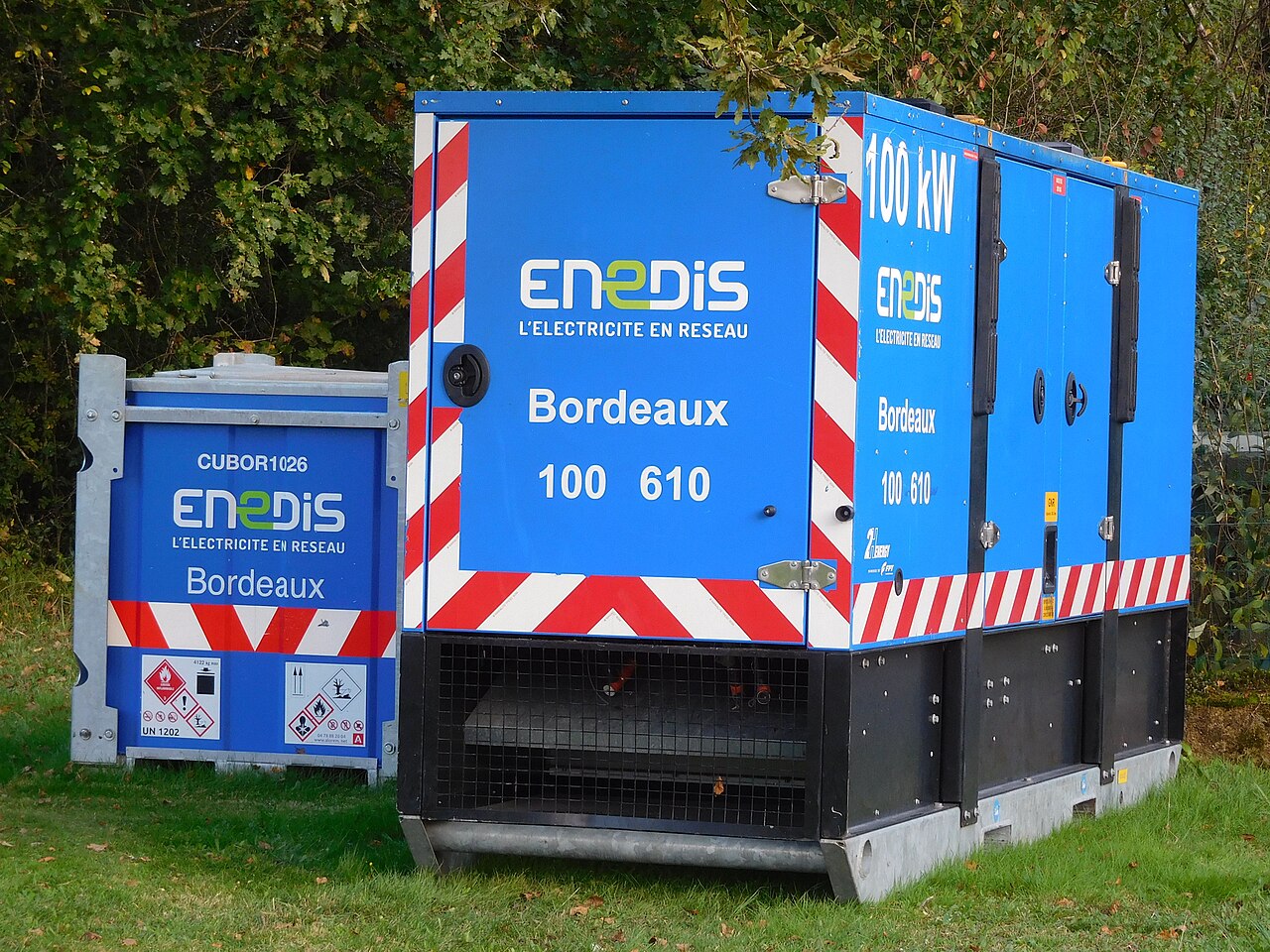
Divide the power chain into three segments. The first is the supply: the permanent building service, a power pedestal or a rented generator. The second is temporary distribution: feeder cable, distribution boxes and the outlets created for the event. The third is equipment connection, which means plugging consoles, amplifiers, lighting, LED walls and catering appliances into outlets someone else has provided.
For each segment, record who supplies it, who installs it, who may change it during the show and who removes it. Licensing questions most often come up around the second segment, but do not assume where the line falls in your location. The map gives your licensing board, permitting office and contractor something specific to confirm.
- Supply: venue owner or generator vendor, with the name of the person who has authority on show day
- Temporary distribution: the party your jurisdiction requires for that work
- Equipment connections: each department, using only outlets the distribution provider has designated
- Mid-show changes: one named person approves any added load or relocated outlet
Build an input-load schedule before asking for a quote
A quote built on guesses will change later. Before contacting a concert electrical contractor, ask every department for a written list of its equipment. Each entry should give the rated input power, connector type, location on site and hours of use. Include audio, lighting, video, catering, backline, merchandise, the production office and any vendor bringing a heater, fridge or fryer. Use ratings from the manufacturer's documentation, not numbers remembered from a previous show.
This schedule is not for sizing cable or protective devices yourself. Its purpose is to give the contractor complete information for designing the festival power distribution and pricing it accurately. It also brings surprises to light early. For example, if a food court or a late-added vendor draws more than expected, the contractor learns that before the design is fixed, not on load-in day.
What to ask the contractor to verify and plan
Ask the contractor, in writing, to confirm that the available supply suits your load schedule and to provide a distribution plan for your actual site. The plan should account for the venue layout, expected weather and local rules. An indoor theater, a parking-lot stage and a riverside field in storm season are very different jobs.
The federal OSHA wiring-methods standard, 29 CFR 1910.305, includes temporary wiring requirements and addresses whether equipment is suitable for its environment [S2]. Whether it applies to your event's workplace, and how, has to be assessed for each case [S2]. Ask your contractor and safety adviser how they made that assessment. Do not treat the regulation as a checklist you can sign off yourself.
Licensing and permitted scope: Texas as a labeled example
Licensing is set at the state level and sometimes locally, so an answer that is correct in one place can be wrong in another. As a labeled example only: according to the Texas Department of Licensing and Regulation, Texas requires licensing and a licensed electrical contractor for non-exempt electrical work, and scope and exemptions matter [S1]. That is a state source covering one state. It is separate from OSHA, a federal workplace regulator [S2].
The Texas example shows that confirming a license exists is only part of the check. You also need to know whether the specific work falls within that license, whether a claimed exemption actually applies, and whether a contractor license is needed in addition to individual credentials [S1]. Outside Texas, put the same questions directly to your own state licensing board and to your city or county permitting office.
- Look up the license number in the issuing authority's own lookup tool, not on a screenshot
- Confirm the license type covers contracting, not only individual work
- Ask the permitting office whether a temporary event permit or inspection is required
Deliverables: records, cable protection, public separation and emergencies
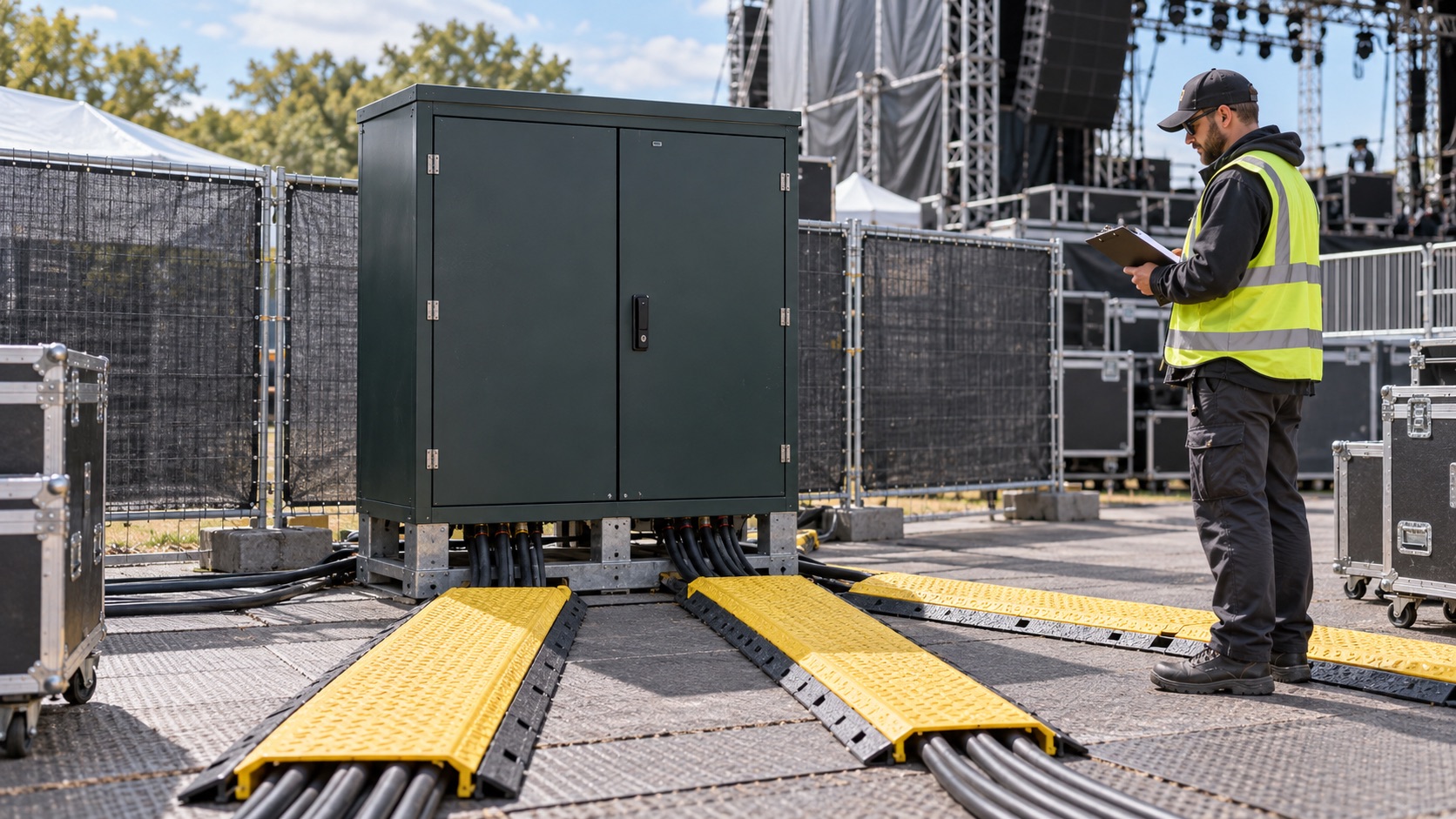
Make safety outputs contract deliverables. Ask for inspection and testing records for the installed distribution, in whatever format the contractor and local authority use. Ask for a cable route plan showing where feeders cross walkways, vehicle lanes or loading paths, and what protection will be used at each crossing. Ask how distribution equipment will be kept away from the public, for example with fencing, locked enclosures or staffed positions.
Emergency arrangements belong in the same document. It should say who can isolate power, where that person will be during the show, how to reach them, and how all of this fits the venue's evacuation plan. If a contractor cannot describe these items before load-in, take that as a warning about the job they intend to deliver.
Reporting trips, damaged connectors and heat without touching the system
Give crews a simple rule: hands off, keep people back, report. Signs that need reporting include protective devices tripping repeatedly, a cracked or scorched connector, a burning smell, or discoloration or heat damage you can see on a cable. Crew members should not touch, test, unplug or move suspect distribution equipment or cable. They should keep others away from the area and contact the named power contact right away. From that point, the qualified person decides what is isolated and how.
Structure the report. Note the time, the location, which box or outlet was involved, what was connected to it and what was observed. That helps the contractor respond quickly. It also shows the crew stayed within their role and did not open boxes, repeatedly reset devices or bypass protection to save a soundcheck. That is the kind of boundary the r/livesound discussion was uncertain about [R1].
Hidden quote gaps that inflate the final bill
A power quote can look complete until site conditions show what it left out. Long feeder routes from a distant supply point add cable, labor and protection costs. Equipment left on site overnight may need security. Some quotes cover installation and removal but not an operator during the show. That matters if you need someone authorized to respond to faults. Vendors added after the quote can force the plan to be redrawn.
Ask about the end of the job too. The OSHA standard addresses removing temporary wiring once its purpose has ended [S2]. Agree in advance who removes it, by when, and who repairs turf, trenches or venue fixtures afterward, so these costs are priced up front rather than disputed later.
- Feeder distance and route assumptions
- Overnight security and custody of equipment
- Show-time operator or standby hours
- Change-order pricing for late vendors
- Strike timing and site reinstatement
Hypothetical worked example: a one-day park concert
This scenario is invented for illustration. A promoter plans a park concert with one stage, a small LED wall, six food trucks and a merch tent. The only supply is a pedestal near the road, far from the stage. The audio company offers to handle power itself. The promoter instead collects a load schedule from every department and finds that, in this case, the food trucks are the largest load.
The promoter sends the schedule to two contractors. Each is asked to confirm whether the pedestal can serve the load, to provide a weather-appropriate plan and to give a license number. The cheaper quote leaves out show-time operator hours, overnight security and turf repair. The other includes a cable-crossing plan for the audience path and a named emergency contact. The promoter checks both licenses with the state board, asks the city whether a permit and inspection are needed, and compares total cost rather than the headline price.
Red flags, verification and when to escalate
Be wary of a provider who says events never need permits, who will not give a license number, or whose licensed name does not match the company invoicing you. Other warning signs are a quote with no load assumptions, a refusal to document testing, or pressure to let stagehands connect distribution to save money. Check claims against the issuing authority's records and with the local permitting office, not against the contractor's reassurance or a forwarded certificate.
Keep two checks separate. A contractor's license tells you who may do the work. Approval of the installation, where it is required, comes from the authority having jurisdiction, such as the local permitting or inspection office. Escalate to the venue's electrical representative, that authority or a qualified safety consultant if the supply seems inadequate, if departments disagree about who owns a segment, if faults keep recurring, or if the weather changes the risk. This checklist is not a site approval.
Your next steps
- Divide the power chain into three segments and name a responsible party for each
- Collect a written input-load schedule from every department and vendor before requesting quotes
- Ask the contractor to confirm supply suitability and provide a plan specific to the site, weather and jurisdiction
- Verify license type and permitted scope with the state board, and ask the local authority about permits and inspection
- Make inspection records, cable protection, public separation and emergency contacts contract deliverables
- Set a crew rule: hands off suspect equipment, keep people back, report to the named power contact
- Check quotes for feeder distance, security, operator hours, late-vendor changes and reinstatement
- Keep a fault log with time, location, connected equipment and observations
Questions that come up next
Can my audio engineer set up the event power distribution?
It depends on the work and the jurisdiction. Plugging gear into designated outlets is different from creating or altering distribution. In Texas, non-exempt electrical work requires licensing and a licensed electrical contractor [S1]. Before anyone outside that scope installs distribution, ask your state licensing board and local permitting office what applies to your event.
Does OSHA 1910.305 apply to every concert?
Not automatically. It is a federal workplace standard that includes temporary wiring requirements, environmental suitability and removal after use, but whether it applies to a particular event has to be assessed [S2]. Ask your contractor or safety adviser how they reached their conclusion. State and local electrical rules may add separate requirements.
Why is one power quote much lower than another?
Compare what each quote actually includes. A lower bid may leave out long feeder routes, overnight security, a show-time operator, change orders for added vendors, or site reinstatement after strike. Ask both contractors to itemize against the same load schedule, and confirm their licenses with the issuing authority before deciding on price.
Sources & further reading
Community discussions identify lived problems; they do not establish technical or legal requirements. Primary references support the specific claims cited above.
- R1 / COMMUNITY DISCUSSIONElectrical Skills ↗
- S1 / PRIMARY REFERENCETexas TDLR: Electricians ↗
- S2 / PRIMARY REFERENCEOSHA 1910.305: Wiring methods, components, and equipment ↗