Why a tube amp's bedroom volume isn't fixed by low wattage
Many guitarists shopping for a bedroom amp assume a smaller wattage number means a quieter amp. That assumption causes a lot of disappointment. Ears do not hear loudness in proportion to power, so cutting wattage sharply reduces volume much less than the numbers suggest. A small tube amp that has been turned up until it starts to break up can still be loud enough to carry through walls and floors.
The problem is common enough to show up in community questions. In one Reddit thread, a guitarist coming back to playing said they wanted tube breakup without bothering the neighbors, and worried that an attenuator might cost more than their budget allowed [R1]. That is one person's account, not evidence of how widespread the issue is. It does capture the usual tension, though: the sound you want and the volume your home can tolerate often pull in opposite directions.
Clean practice versus power-stage saturation
Start by deciding which kind of sound you actually need. Clean practice means the amp reproduces your playing without much distortion. Almost any amp with a usable volume control can do this quietly. Distortion comes from two broad places. Preamp gain is created early in the signal chain and can be heard at modest volume. Power-stage saturation happens when the output tubes themselves are pushed hard, and it usually requires the amp to run near the top of its output.
Players often say they want a cranked tube sound, and what they usually mean is power-stage saturation, with its compression and feel. Be honest about whether you need that at home. If most of your practice is learning parts, building technique, or writing, preamp distortion at a sensible level may serve you better than chasing output-tube breakup in a room that cannot handle it.
- Clean practice: easiest to keep quiet on nearly any amp
- Preamp gain: distortion available at lower volume
- Power-stage saturation: usually requires the output section to work hard, so volume rises with it
Gain, master volume and power reduction compared
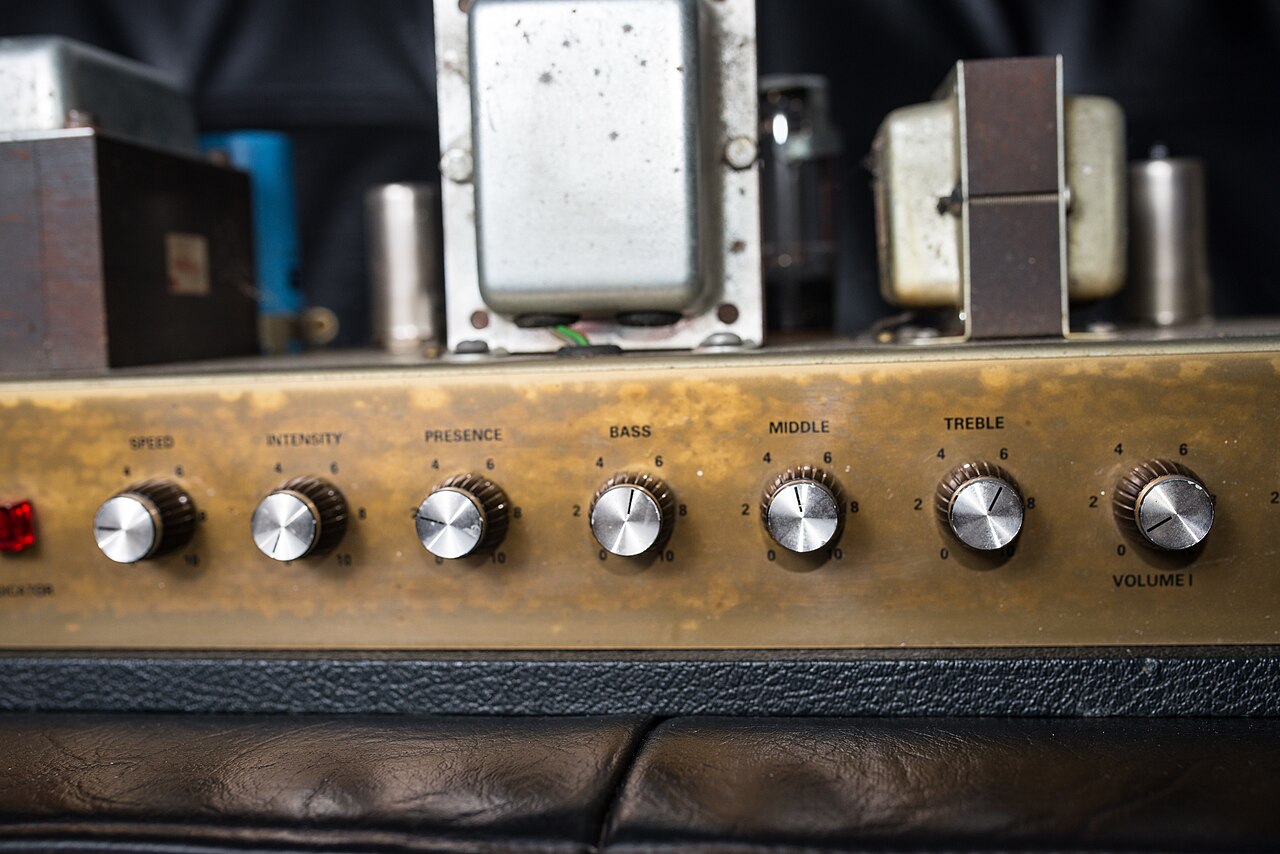
Three features shape how controllable an amp is at home. A gain control sets how hard the preamp is driven. A master volume sets the overall output after that distortion has been created. Power reduction lowers how much output the power stage can produce. Orange lists the Rocker 15 Combo with separate gain and volume controls and selectable operation at 0.5, 1, 7 and 15 watts [S1]. That makes it a useful example of a design that offers more than one way to manage level.
Each feature has limits. A master volume lets you get preamp distortion at low volume, but the power tubes are not being pushed much, so the feel can differ from a fully cranked amp. Power reduction lets the output stage work harder at a lower ceiling, but a selectable 0.5-watt mode does not tell you how loud the amp will sound in your bedroom [S1]. Room size, speaker, cabinet and your own settings all change the result. Treat the wattage label as a starting point for questions, not as a promise about volume.
Audition at your actual target listening level
Many store demos happen at volumes far above what you can use at home. An amp that sounds rich at a loud demo level may sound thin or fizzy at the level your neighbors will accept, and a different amp may hold together better when turned down. Before you test anything, decide on your target level. A practical benchmark is roughly the volume of normal conversation, or whatever your household and building realistically allow.
When you audition, ask to play at that level and leave it there. Try the gain, master and any power modes in combination, and listen for whether the tone stays usable or collapses. If you are buying online, check the return policy before ordering so you can test the amp in the room where you will actually use it.
- Set the target volume before you start comparing amps
- Test every power mode at that same level
- Compare tone at low volume, not just at the demo setting
- Confirm return terms when buying remotely
Speaker efficiency and cabinet response
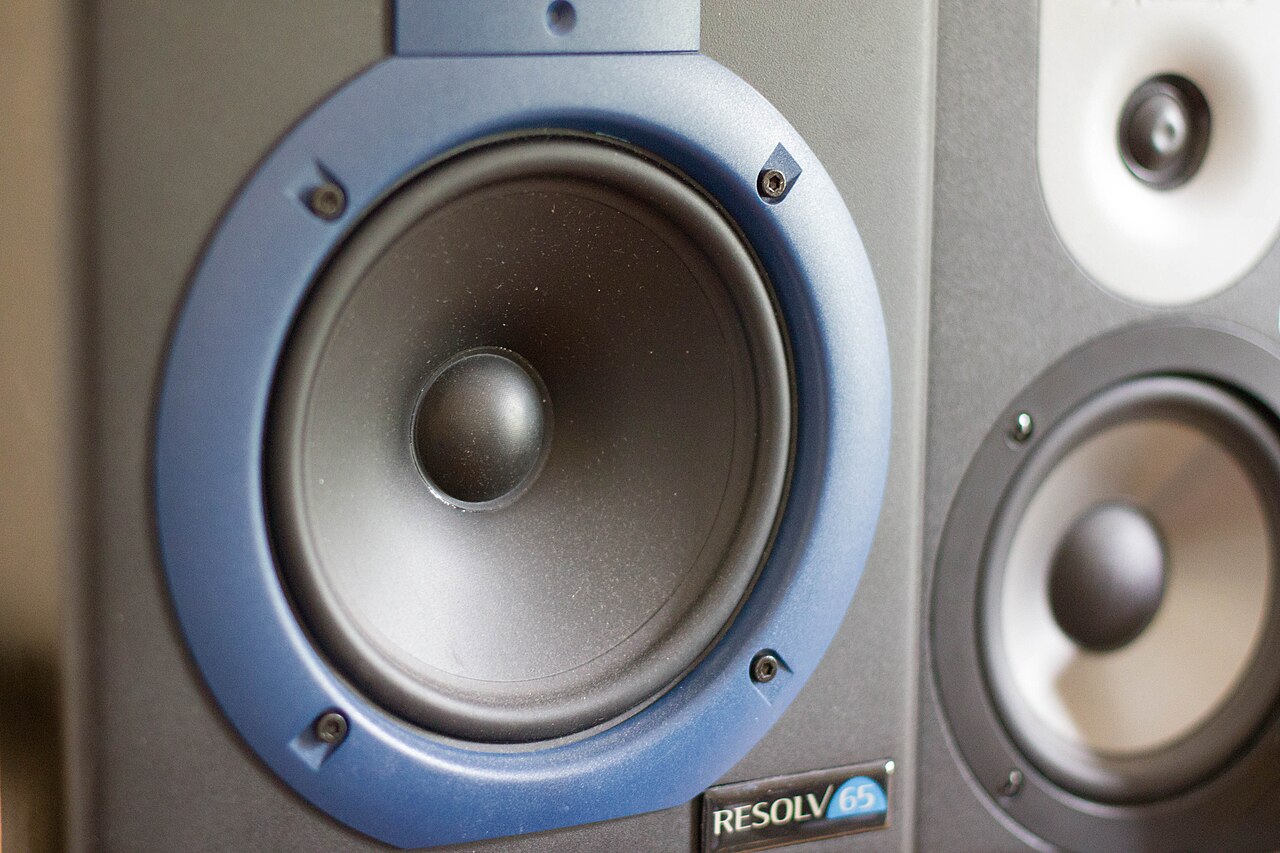
The speaker turns the amp's power into sound, and speakers differ in how much sound they produce from the same power. Two amps with identical wattage can sound noticeably different in loudness if one drives a more efficient speaker. Cabinet design matters too. Open-back and closed-back cabinets project and fill a room differently, and a larger cabinet or extra speakers can make a small amp feel bigger than expected.
If an amp is close to working for you but slightly too loud, the speaker is a possible area to look at. Do not assume a swap will solve it. Speaker sensitivity specifications are measured under particular conditions, and real rooms vary. Any speaker change must also match the amp's required impedance and power handling. Confirm those requirements with the amp manufacturer or a qualified technician before buying replacement parts.
Pricing headphones and modeling alongside tube options
Compare total cost, not just the price of the amp. A low-watt tube amp may still need an attenuator or other accessory to reach truly quiet levels, and the worry in the Reddit anecdote was exactly that this extra cost might break the budget [R1]. Headphone amps, modeling amps, and amp-modeling devices are options worth pricing alongside tube amps. Many can deliver distorted tones at very low volume, or silently through headphones.
The tradeoffs depend on your priorities. Tube amps appeal to many players for their feel and response. Modeling and headphone setups usually give more flexibility for late-night playing and shared walls. Some players combine both: a modeler or headphones for daily practice, and a tube amp for times and places where volume is acceptable. Check current prices yourself, because they change, and include cables, power supplies and accessories in your total.
Verify speaker and load compatibility for any attenuator
A bedroom amp attenuator sits between the amp and the speaker and absorbs part of the output so the speaker plays more quietly. It works with the amp's output stage, so compatibility is a safety and reliability issue, not just a tonal preference. Tube amps generally require a correct load at the output. Never run a tube amp without the load the manufacturer specifies, and never improvise load wiring or homemade substitutes.
Before you buy an attenuator, confirm in writing from both the amp maker and the attenuator maker that the impedance settings and power rating suit your specific amp. Find out whether the amp's warranty is affected by using one. If the documentation is unclear, a qualified amp technician should review the setup. Do not open the amp or modify wiring yourself, because tube amps can hold dangerous voltages even when unplugged.
- Match the output impedance exactly
- Confirm the attenuator's power rating exceeds the amp's maximum output
- Ask whether the warranty covers attenuator use
- Use only manufacturer-approved connections
Hypothetical worked example
Hypothetical scenario, not a real case: Dana lives in an apartment and wants a crunchy rhythm tone for evening practice. Dana first decides that conversation-level volume is the realistic ceiling, and that solid preamp crunch is acceptable at home, while full power-tube saturation can wait for rehearsal spaces. Dana shortlists a tube combo with separate gain and master controls plus power modes, and also a modeling amp with a headphone output.
At the store, Dana sets the target level and tests every mode at that level. The tube combo sounds good in its lowest power mode with the master set low, but it gets too loud once the volume is raised enough to get the output stage working. The modeler matches the needed crunch silently through headphones. Dana adds up the cost of the tube amp plus an attenuator verified as compatible, compares it with the modeler, and chooses based on budget and feel, not on the wattage label.
Red flags and how to verify claims
Be cautious with listings or sales pitches that describe a low-watt amp as apartment-friendly or neighbor-safe with no detail about the conditions. Wattage figures describe electrical output. They do not describe how loud an amp will be in a particular room [S1]. Also be skeptical of attenuators sold as universal without clear impedance and power ratings, and of used amps whose speakers or modifications cannot be documented.
To check claims, download the owner's manual and specifications from the manufacturer. Ask the seller for model and serial details on used gear, and contact the manufacturer directly about compatibility questions. Treat forum posts as useful leads about common frustrations, not as verified technical data.
- Vague quiet or bedroom claims with no conditions stated
- Missing impedance or power ratings on attenuators
- Undocumented speaker swaps or modifications on used amps
- Pressure to buy before a low-volume audition
When escalation makes sense
Contact a qualified amp technician if you notice burning smells, unusual hum, intermittent output, or uncertainty about speaker or load matching. Any internal adjustment, tube replacement beyond what the manual describes, or modification belongs with a professional. The same applies if a previous owner's work is unclear.
Noise disputes are a separate question. If neighbors complain despite reasonable precautions, check your lease, building rules or local noise ordinance with the relevant landlord or city office instead of relying on general advice. Rules differ by location, and switching to headphones during quiet hours is often the simplest fix.
Your next steps
- Decide whether you need clean practice, preamp gain, or true power-stage saturation
- Set a realistic target volume for your room before auditioning
- Prefer amps with separate gain and master volume or selectable power modes
- Test every mode at your target level, not at demo volume
- Factor speaker efficiency and cabinet type into your loudness expectations
- Price headphone and modeling options alongside the full cost of a tube setup
- Confirm attenuator impedance, power rating and warranty impact with both manufacturers
- Never run a tube amp without its required load; send internal work to a qualified technician
Questions that come up next
Is a 1-watt tube amp quiet enough for an apartment?
Not necessarily. Perceived loudness does not drop in proportion to wattage, and the speaker, cabinet, room and your settings all affect how loud the amp sounds. A low power mode is a helpful feature, but test the amp at your intended volume and in your own space if the return policy allows it.
Does a master volume give the same tone as a cranked amp?
Not exactly. A master volume lets you get preamp distortion at lower levels, but the output tubes are not pushed as hard as they would be in a fully cranked amp, so feel and compression can differ. Many players find master-volume tones satisfying for home practice. Compare the two at the same volume before deciding.
Can I use any attenuator with my tube amp?
No. An attenuator has to match your amp's output impedance and safely handle its maximum power. Confirm compatibility with both the amp manufacturer and the attenuator manufacturer, and ask about warranty effects. Never run a tube amp without its required load, and leave any wiring questions to a qualified amp technician.
Sources & further reading
Community discussions identify lived problems; they do not establish technical or legal requirements. Primary references support the specific claims cited above.
- R1 / COMMUNITY DISCUSSIONBest (tube)Amp for a Bedroom setting? ↗
- S1 / PRIMARY REFERENCEOrange Rocker 15 Combo ↗