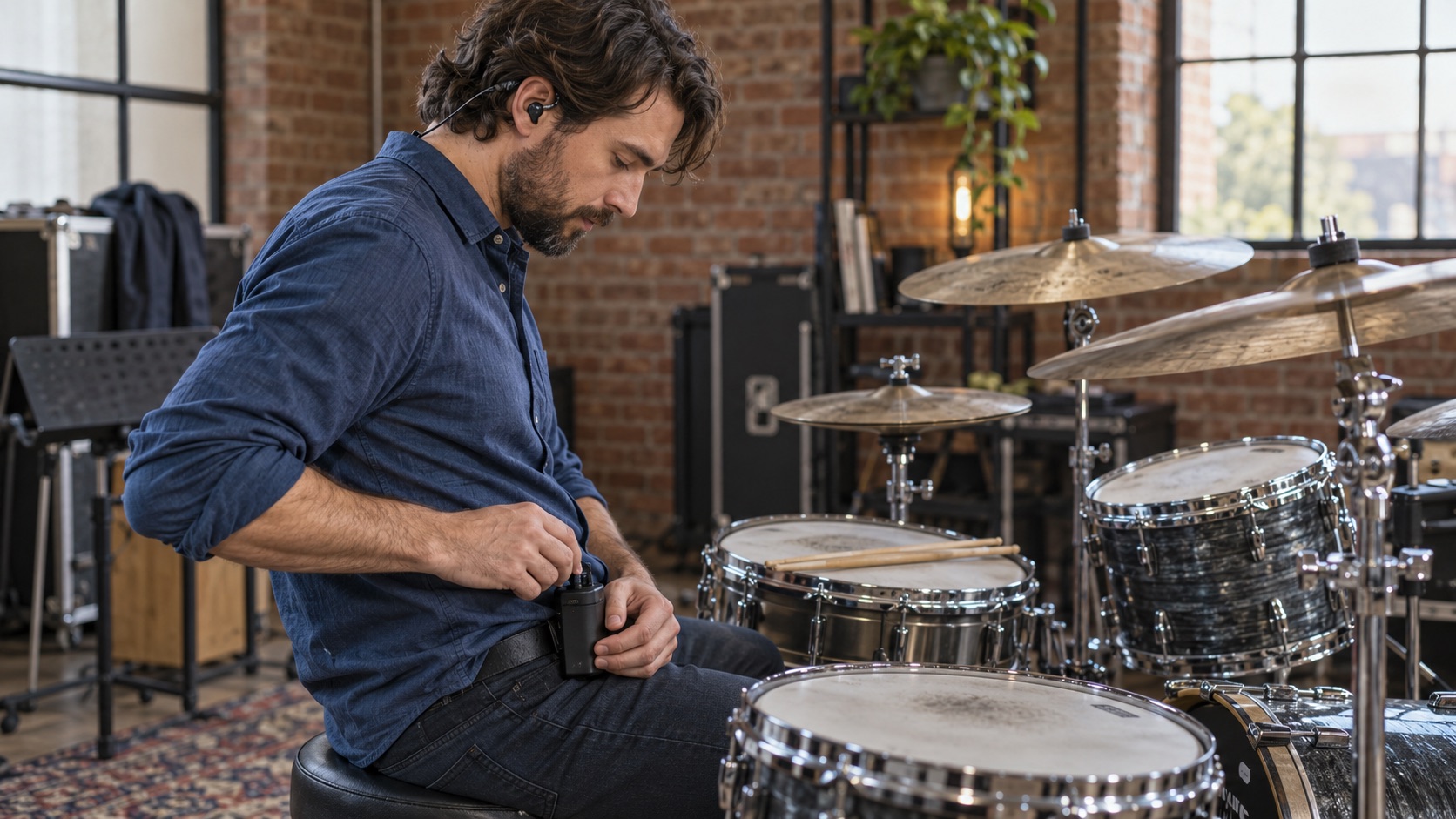
Start With Why the Earpiece Comes Out
Performers who take one in-ear monitor out are rarely being careless. They are reacting to something, and the useful first step is to name it precisely, because each cause has a different fix and pulling the earpiece solves none of them well.
There are four common reasons. Isolation: feeling sealed off from the band and the room. Missing audience sound: no crowd response, no applause cues, no sense of the space. Poor fit: the earpiece aches, slips or loses its seal, sounds thin and gets pulled out for relief. An unusable mix: cluttered, too quiet, or missing the pitch or timing reference the performer needs. Note which applies and when. A singer who pulls the left earpiece only to talk between songs has a different problem from a drummer who removes it two songs in because it hurts.
- Isolation: cut off from the band or the room
- Missing audience: no crowd, applause or room cues
- Fit: pain, slipping, or a broken seal that thins the sound
- Mix: wrong balance, missing pitch or timing reference
What Changes When Only One Ear Gets the Mix
Listening with two ears gives a sense of loudness and space that one ear alone does not easily reproduce. With one earpiece out, the remaining mix can seem quieter or flatter, and the natural response is to ask for more level. In a community thread on r/livesound, someone asked why one-ear use is discouraged; replies, as shown in a search excerpt, described people raising volume to compensate and leaving the open ear exposed to stage sound [R1]. These are anecdotal comments, not measurements.
This guide gives no decibel figure for that compensation. Numbers quoted in forum threads depend on the gear, mix, venue and listener, and they are not universal medical facts. The practical point stands without a number: if the earpiece side keeps creeping up while the open ear takes the backline and wedges, both ears may be getting more sound than you intended.
Two Exposure Paths, Two Separate Controls
Treat stage sound and in-ear sound as separate routes into your ears. The open ear hears drums, amps, side fills and PA spill with nothing in the way. The ear with the earpiece hears whatever the monitor mix delivers, plus anything leaking past a poor seal. Turning one down does nothing for the other.
NIOSH material on musicians' hearing recommends exposure assessment, lower rehearsal levels, hearing protection and hearing evaluations [S1]. The excerpt reviewed here does not prescribe an in-ear workflow; the two-path framing is our interpretation for monitoring. In practice it means considering how loud the stage is, how loud the in-ear feed is, and how long you are exposed to each.
Better Alternatives: Mix, Ambience and Fit
If the mix is the problem, ask your engineer for a better two-ear mix. Cut what you do not need before adding what you do. Panning instruments across both ears often makes each part easier to hear without raising overall level, and a clear self-reference with one supporting instrument can make everything else less critical.
If isolation or missing crowd sound is the issue, the usual alternative is an ambient or audience microphone feed: room or crowd mics blended into the mix at a controlled level. Some personal monitor systems and earpieces offer ambient or pass-through features, but behavior varies by model, so ask the manufacturer how the feature works and whether it changes overall output. If fit is the issue, fix it first: try different tip sizes or materials, check insertion, or consider custom molds. A good seal is what makes lower listening levels workable; a leaky one pushes you to turn up.
- Mix problem: subtract, pan and prioritize a clear self-reference
- Isolation or audience problem: a controlled ambience feed
- Fit problem: tip changes, insertion technique or custom impressions
- Tradeoff: ambience feeds add stage noise back in, so set them conservatively
Run a Conservative Rehearsal Trial With Your Engineer
Do not trial changes during a show. Book rehearsal time with the engineer who will run your mix and keep levels conservative, in line with NIOSH's broader recommendation of lower rehearsal levels [S1]. Change one variable at a time: fit first, then balance, then ambience.
Log which tips or molds you used, which channels you cut, how much ambience was blended, and whether you still wanted to remove an earpiece. If the engineer has tools for estimating in-ear levels, ask what they measure and how. A phone app can at most give a rough comparison of room or stage sound between sessions; it cannot tell you what a sealed earpiece delivers to your eardrum. Afterward, note any ringing, fullness or muffled hearing.
Hypothetical Worked Example
Hypothetical scenario, not a real case: a lead vocalist in a five-piece band removes her right earpiece midway through every set. She cannot hear the crowd and feels like she is singing into a box. Her mix is mostly her voice, keys and a loud kick drum, and her generic foam tips have started to feel loose.
Her engineer schedules a rehearsal at modest levels. A better-fitting tip makes her voice sound fuller, so she asks for less overall level. They pull the kick back, pan keys and guitar to opposite sides, and blend in audience mics at a low level. She keeps both earpieces in for the full run-through. They agree to recheck the ambience at the first show, since a full room behaves differently, and she books a baseline hearing evaluation.
Red Flags and How to Verify Claims
Be skeptical of any earpiece, limiter or app sold as making one-ear monitoring safe or guaranteeing protection at any volume. No product removes the stage sound reaching an open ear. Ask for documentation of what the device limits, how it was tested and under what conditions; if the seller cannot provide it, treat the claim as unverified.
Be equally careful with forum posts that present exact decibel gains or safe hours as rules; those figures may reflect one person's setup. For hearing tests or custom impressions, ask the provider which license they hold and confirm it with the issuing authority rather than trusting a website badge.
- Vague hearing-safe claims with no test details
- Exact dB or time limits presented as universal facts
- Tests or impressions offered without verifiable credentials
- Pressure to buy before trying fit or mix fixes
When to Stop and Get Help
Sudden hearing loss is not something to wait out after a gig. NIDCD patient guidance describes sudden deafness symptoms as a medical emergency, says to see a doctor immediately, and notes that delaying diagnosis and treatment can make treatment less effective [S2]. Contact your doctor, urgent care or an ear, nose and throat clinic rather than trying to judge it yourself; a music article cannot diagnose anything.
Other changes call for a scheduled audiologist visit: ringing that recurs after shows or takes longer to fade, muffled hearing that lingers, persistent ear discomfort from your earpieces, or growing difficulty following speech. NIOSH lists hearing evaluations among its recommendations for musicians [S1], and a baseline test gives you something to compare against.
Performers with existing hearing loss in one ear are in a different situation. One-ear monitoring may be a practical necessity, and they need individual advice from an audiologist. Bring rehearsal notes and monitor details to any appointment, along with questions like these.
- Does my test show differences between my ears?
- How often should I be retested given my performance schedule?
- Are custom molds or specific tips appropriate for my ears?
- How should I think about stage exposure versus in-ear exposure?
- Is an ambience feed reasonable for my hearing profile?
- Which symptoms should make me stop performing and contact you or a doctor?
Your next steps
- Write down exactly why you remove an earpiece: isolation, audience sound, fit or mix
- Fix fit first with different tips or custom impressions before raising any level
- Ask your engineer for a subtractive, panned two-ear mix
- Trial a low-level audience or ambience mic feed instead of a bare ear
- Run changes in rehearsal at conservative levels, one variable at a time
- Use phone apps only for rough room comparisons, never to judge in-ear levels
- Verify product claims and practitioner credentials before buying or booking
- Get a baseline hearing evaluation and see a doctor immediately for any sudden hearing loss
Questions that come up next
Can wearing only one in-ear monitor damage my hearing?
Not automatically, but it creates two exposure paths. The open ear hears stage sound unprotected, and community anecdotes describe performers turning the remaining earpiece up to compensate. Whether that becomes harmful depends on levels and duration. Exposure assessment and hearing evaluations, which NIOSH recommends for musicians, are the way to understand your own situation.
Will an ambient microphone feed fix the isolation problem?
It often helps. Audience or room mics blended into your mix restore a sense of the crowd at a level you control. Built-in ambient features on some earpieces vary by model, so ask the manufacturer how they work. Set any ambience feed conservatively, because it adds stage noise back into your ears.
What if I already have hearing loss in one ear?
Then general advice is not enough. One-ear monitoring may be appropriate or even necessary for you, but that decision should come from an audiologist who knows your test results and performance setup. Bring monitor details and rehearsal notes, and if hearing in either ear suddenly drops, see a doctor immediately, as NIDCD advises.
Sources & further reading
Community discussions identify lived problems; they do not establish technical or legal requirements. Primary references support the specific claims cited above.
- R1 / COMMUNITY DISCUSSIONWhy is it bad to take one IEM out? ↗
- S1 / PRIMARY REFERENCENIOSH: Reducing hearing risk among musicians ↗
- S2 / PRIMARY REFERENCENIDCD: Sudden Deafness ↗